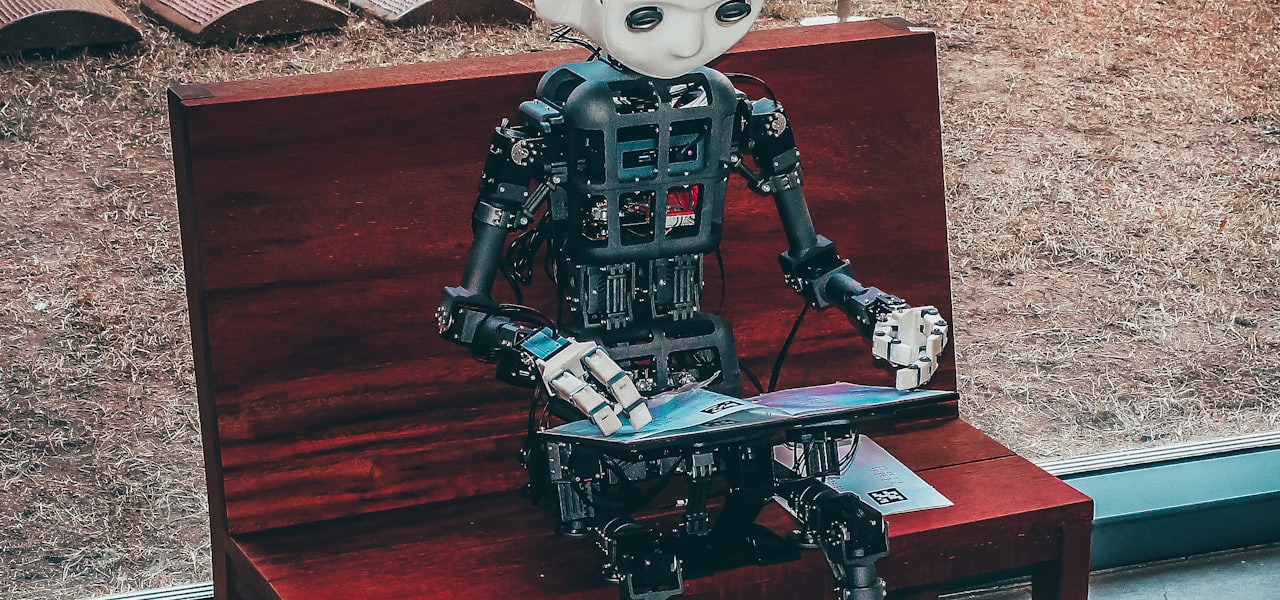
AI Arabic Paraphrasing Tool

AI Arabic Paraphrasing Tool — independent reviews, comparisons, pricing and step-by-step guides on Aizhi.

  • Game Jolt

    Game Jolt

    Game Jolt is a social community platform for video games, gamers and content creators. Founded by Yaprak and David DeCarmine, it is available on iOS, Android, and on the web and as a desktop app for Windows and Linux. Users share interactive content through a variety of formats including images, videos, live streams, chat rooms, and virtual events. == Features == === Crowd streaming === In 2021 Game Jolt revealed their own live streaming feature called Firesides. Firesides allowed multiple users to simultaneously livestream together with nearly no delay. The feature launched with a virtual concert showcasing its ability to accommodate multiple streamers. On October 16, 2023, Firesides were removed from Game Jolt. === Mobile app === Game Jolt Social by Game Jolt Inc. launched on both the Apple App Store and Google Play Store in March 2022. "It's clear to us that Gen Z is tired of generic social media and they want a place specifically for gaming that supports all types of content they're creating–art, videos, thoughts, and livestreams all in one place." said Game Jolt founder and CEO Yaprak DeCarmine, in a statement to VentureBeat. === Game API === The Game Jolt Application Programming Interface (usually known as the Game Jolt Game API) allows any developer using a game development platform that supports HTTP operations and MD5 or SHA-1. Game Jolt advertises that the API can: Create multiple "scoreboards" which collect high scores from players made publicly available on the game's profile and give user accounts EXP Award player's trophies which give user accounts EXP Store game data on Game Jolt's data servers Log whether a user is currently playing a game they're logged into via the GJAPI == Game jams and competitions == Game Jolt regularly hosts game jams where participants are encouraged to develop games for a chance to win prizes. They hosted their first game jam in 2009, Shocking Contest. In November 2014, Game Jolt announced the "Indies vs PewDiePie" game jam, partnering with the popular YouTuber Felix "PewDiePie" Kjellberg. Developers were given a weekend (21–24 November) to create a game with the theme of "fun to play, fun to watch" to suit the Let's Plays entertainment style. Users could rate entries afterwards until December 1 when the scores were counted up. The prize to the top 10 rated games was Felix playing the games on his channel as a means of promotion for the developers, although later he played other entries. One of the participants of the jam, now known as Outerminds Inc. was discovered and hired by PewDiePie to develop his mobile game, Legend of the Brofist. Game Jolt partnered with Felix, Sean "Jacksepticeye" McLoughlin and Mark "Markiplier" Fischbach to host "Indies vs Gamers" in July 2015. The requirements for entries were arcade games using the Game Jolt Game API highscore tables, to be made between the July 17–20 and the top 5 games were played on the partner's YouTube channels. Following the "Indies vs PewDiePie" game jam in 2014, Game Jolt released their internal jam hosting tools public for all users to use as a service, to create their own game jams that integrated with the main site. Today, Game Jolt focuses on hosting and co-hosting game competitions with established brands in order to bring monetary and educational opportunities to their users. On April 15, 2024, an announcement was made about a collaboration with Pocket Worlds for the "HighRise Game Jam". Pocket Worlds had sold NFTs up until roughly 2022, causing a community outburst. The situation was addressed, and the situation started to disperse. == Contests == == Events == Game Jolt hosts both physical and virtual events to entertain and prank its users, which consists of the following: == History == Game Jolt has supported independent creators with a central platform to manage their content and communities since its start in 2003. David DeCarmine began development of Game Jolt at the age of 14 for a group of hobbyists, making games and sharing on forums in an early iteration known as Holo World. The original intention was to create a platform for gamers where new games could be discoverable and quickly playable, and where feedback could be provided directly to the creators, allowing them to continue improving their games. In 2008, Game Jolt was registered as an LLC, then incorporated as Game Jolt Inc. in September 2020. A new site launched in 2015 featuring a responsive design, automated curation for both games and game news articles which weighs how recent a game was uploaded and how popular it is ("hot") and filtering options on game listings for platform, maturity rating and development status. In March 2022, Game Jolt launched a mobile application simultaneously on the Google Play Store and Apple App Store targeted at Gen Z gamers and creators. While in beta, the mobile app had 100,000 installs pre-launch. === Game store === Game Jolt continues to host a large library of independent games. Game developers can upload their games directly to the site to share or sell. They would allow distribution for downloadable games, later adding support for Adobe Flash, Unity and Java games which allowed support for browser based games. In February 2013, Game Jolt built support for browser-based HTML5 games as well. A user levelling system was released into public beta in April 2013, incorporating the GJAPI trophies and highscores, as well as site activity, to generate 'EXP' (experience points). Game Jolt Jams released in early 2014 as a service to allow users to create their own game jams that integrated with the main site. In April 2016, an online marketplace was announced and released the following month with an exclusive set of game titles, including Bendy and the Ink Machine, allowing developers to sell their games on the site. In January 2016, Game Jolt released source code of the client and site's front end on GitHub under MIT license. In January 2022, Game Jolt banned adult games from appearing on the site, stating in an email to developers that the site had become a "social media platform" and they "had to make decisions around the direction and future of the brand which has now included the removal of hosted games with explicitly adult content." In response to a tweet by Itch.io saying the site is not for prudes, they wrote in their own tweet: "Game Jolt is a platform with a large audience of 13-16 year olds. Our users asked us to clean up, so here we are." == Investments == After bootstrapping Game Jolt with revenue earned from ads on the website for years, the DeCarmines secured venture capital in 2020 from SoftBank, doing so again in 2021 from founders of Twitch, Rec Room, Modio and more.

    Read more →
  • Evolvability (computer science)

    Evolvability (computer science)

    The term evolvability is a framework of computational learning introduced by Leslie Valiant in his paper of the same name. The aim of this theory is to model biological evolution and categorize which types of mechanisms are evolvable. Evolution is an extension of PAC learning and learning from statistical queries. == General framework == Let F n {\displaystyle F_{n}\,} and R n {\displaystyle R_{n}\,} be collections of functions on n {\displaystyle n\,} variables. Given an ideal function f ∈ F n {\displaystyle f\in F_{n}} , the goal is to find by local search a representation r ∈ R n {\displaystyle r\in R_{n}} that closely approximates f {\displaystyle f\,} . This closeness is measured by the performance Perf ⁡ ( f , r ) {\displaystyle \operatorname {Perf} (f,r)} of r {\displaystyle r\,} with respect to f {\displaystyle f\,} . As is the case in the biological world, there is a difference between genotype and phenotype. In general, there can be multiple representations (genotypes) that correspond to the same function (phenotype). That is, for some r , r ′ ∈ R n {\displaystyle r,r'\in R_{n}} , with r ≠ r ′ {\displaystyle r\neq r'\,} , still r ( x ) = r ′ ( x ) {\displaystyle r(x)=r'(x)\,} for all x ∈ X n {\displaystyle x\in X_{n}} . However, this need not be the case. The goal then, is to find a representation that closely matches the phenotype of the ideal function, and the spirit of the local search is to allow only small changes in the genotype. Let the neighborhood N ( r ) {\displaystyle N(r)\,} of a representation r {\displaystyle r\,} be the set of possible mutations of r {\displaystyle r\,} . For simplicity, consider Boolean functions on X n = { − 1 , 1 } n {\displaystyle X_{n}=\{-1,1\}^{n}\,} , and let D n {\displaystyle D_{n}\,} be a probability distribution on X n {\displaystyle X_{n}\,} . Define the performance in terms of this. Specifically, Perf ⁡ ( f , r ) = ∑ x ∈ X n f ( x ) r ( x ) D n ( x ) . {\displaystyle \operatorname {Perf} (f,r)=\sum _{x\in X_{n}}f(x)r(x)D_{n}(x).} Note that Perf ⁡ ( f , r ) = Prob ⁡ ( f ( x ) = r ( x ) ) − Prob ⁡ ( f ( x ) ≠ r ( x ) ) . {\displaystyle \operatorname {Perf} (f,r)=\operatorname {Prob} (f(x)=r(x))-\operatorname {Prob} (f(x)\neq r(x)).} In general, for non-Boolean functions, the performance will not correspond directly to the probability that the functions agree, although it will have some relationship. Throughout an organism's life, it will only experience a limited number of environments, so its performance cannot be determined exactly. The empirical performance is defined by Perf s ⁡ ( f , r ) = 1 s ∑ x ∈ S f ( x ) r ( x ) , {\displaystyle \operatorname {Perf} _{s}(f,r)={\frac {1}{s}}\sum _{x\in S}f(x)r(x),} where S {\displaystyle S\,} is a multiset of s {\displaystyle s\,} independent selections from X n {\displaystyle X_{n}\,} according to D n {\displaystyle D_{n}\,} . If s {\displaystyle s\,} is large enough, evidently Perf s ⁡ ( f , r ) {\displaystyle \operatorname {Perf} _{s}(f,r)} will be close to the actual performance Perf ⁡ ( f , r ) {\displaystyle \operatorname {Perf} (f,r)} . Given an ideal function f ∈ F n {\displaystyle f\in F_{n}} , initial representation r ∈ R n {\displaystyle r\in R_{n}} , sample size s {\displaystyle s\,} , and tolerance t {\displaystyle t\,} , the mutator Mut ⁡ ( f , r , s , t ) {\displaystyle \operatorname {Mut} (f,r,s,t)} is a random variable defined as follows. Each r ′ ∈ N ( r ) {\displaystyle r'\in N(r)} is classified as beneficial, neutral, or deleterious, depending on its empirical performance. Specifically, r ′ {\displaystyle r'\,} is a beneficial mutation if Perf s ⁡ ( f , r ′ ) − Perf s ⁡ ( f , r ) ≥ t {\displaystyle \operatorname {Perf} _{s}(f,r')-\operatorname {Perf} _{s}(f,r)\geq t} ; r ′ {\displaystyle r'\,} is a neutral mutation if − t < Perf s ⁡ ( f , r ′ ) − Perf s ⁡ ( f , r ) < t {\displaystyle -t<\operatorname {Perf} _{s}(f,r')-\operatorname {Perf} _{s}(f,r) 0 {\displaystyle \epsilon >0\,} , for all ideal functions f ∈ F n {\displaystyle f\in F_{n}} and representations r 0 ∈ R n {\displaystyle r_{0}\in R_{n}} , with probability at least 1 − ϵ {\displaystyle 1-\epsilon \,} , Perf ⁡ ( f , r g ( n , 1 / ϵ ) ) ≥ 1 − ϵ , {\displaystyle \operatorname {Perf} (f,r_{g(n,1/\epsilon )})\geq 1-\epsilon ,} where the sizes of neighborhoods N ( r ) {\displaystyle N(r)\,} for r ∈ R n {\displaystyle r\in R_{n}\,} are at most p ( n , 1 / ϵ ) {\displaystyle p(n,1/\epsilon )\,} , the sample size is s ( n , 1 / ϵ ) {\displaystyle s(n,1/\epsilon )\,} , the tolerance is t ( 1 / n , ϵ ) {\displaystyle t(1/n,\epsilon )\,} , and the generation size is g ( n , 1 / ϵ ) {\displaystyle g(n,1/\epsilon )\,} . F {\displaystyle F\,} is evolvable over D {\displaystyle D\,} if it is evolvable by some R {\displaystyle R\,} over D {\displaystyle D\,} . F {\displaystyle F\,} is evolvable if it is evolvable over all distributions D {\displaystyle D\,} . == Results == The class of conjunctions and the class of disjunctions are evolvable over the uniform distribution for short conjunctions and disjunctions, respectively. The class of parity functions (which evaluate to the parity of the number of true literals in a given subset of literals) are not evolvable, even for the uniform distribution. Evolvability implies PAC learnability.

    Read more →
  • Similarity learning

    Similarity learning

    Similarity learning is an area of supervised machine learning in artificial intelligence. It is closely related to regression and classification, but the goal is to learn a similarity function that measures how similar or related two objects are. It has applications in ranking, in recommendation systems, visual identity tracking, face verification, and speaker verification. == Learning setup == There are four common setups for similarity and metric distance learning. Regression similarity learning In this setup, pairs of objects are given ( x i 1 , x i 2 ) {\displaystyle (x_{i}^{1},x_{i}^{2})} together with a measure of their similarity y i ∈ R {\displaystyle y_{i}\in R} . The goal is to learn a function that approximates f ( x i 1 , x i 2 ) ∼ y i {\displaystyle f(x_{i}^{1},x_{i}^{2})\sim y_{i}} for every new labeled triplet example ( x i 1 , x i 2 , y i ) {\displaystyle (x_{i}^{1},x_{i}^{2},y_{i})} . This is typically achieved by minimizing a regularized loss min W ∑ i l o s s ( w ; x i 1 , x i 2 , y i ) + r e g ( w ) {\displaystyle \min _{W}\sum _{i}loss(w;x_{i}^{1},x_{i}^{2},y_{i})+reg(w)} . Classification similarity learning Given are pairs of similar objects ( x i , x i + ) {\displaystyle (x_{i},x_{i}^{+})} and non similar objects ( x i , x i − ) {\displaystyle (x_{i},x_{i}^{-})} . An equivalent formulation is that every pair ( x i 1 , x i 2 ) {\displaystyle (x_{i}^{1},x_{i}^{2})} is given together with a binary label y i ∈ { 0 , 1 } {\displaystyle y_{i}\in \{0,1\}} that determines if the two objects are similar or not. The goal is again to learn a classifier that can decide if a new pair of objects is similar or not. Ranking similarity learning Given are triplets of objects ( x i , x i + , x i − ) {\displaystyle (x_{i},x_{i}^{+},x_{i}^{-})} whose relative similarity obey a predefined order: x i {\displaystyle x_{i}} is known to be more similar to x i + {\displaystyle x_{i}^{+}} than to x i − {\displaystyle x_{i}^{-}} . The goal is to learn a function f {\displaystyle f} such that for any new triplet of objects ( x , x + , x − ) {\displaystyle (x,x^{+},x^{-})} , it obeys f ( x , x + ) > f ( x , x − ) {\displaystyle f(x,x^{+})>f(x,x^{-})} (contrastive learning). This setup assumes a weaker form of supervision than in regression, because instead of providing an exact measure of similarity, one only has to provide the relative order of similarity. For this reason, ranking-based similarity learning is easier to apply in real large-scale applications. Locality sensitive hashing (LSH) Hashes input items so that similar items map to the same "buckets" in memory with high probability (the number of buckets being much smaller than the universe of possible input items). It is often applied in nearest neighbor search on large-scale high-dimensional data, e.g., image databases, document collections, time-series databases, and genome databases. A common approach for learning similarity is to model the similarity function as a bilinear form. For example, in the case of ranking similarity learning, one aims to learn a matrix W that parametrizes the similarity function f W ( x , z ) = x T W z {\displaystyle f_{W}(x,z)=x^{T}Wz} . When data is abundant, a common approach is to learn a siamese network – a deep network model with parameter sharing. == Metric learning == Similarity learning is closely related to distance metric learning. Metric learning is the task of learning a distance function over objects. A metric or distance function has to obey four axioms: non-negativity, identity of indiscernibles, symmetry and subadditivity (or the triangle inequality). In practice, metric learning algorithms ignore the condition of identity of indiscernibles and learn a pseudo-metric. When the objects x i {\displaystyle x_{i}} are vectors in R d {\displaystyle R^{d}} , then any matrix W {\displaystyle W} in the symmetric positive semi-definite cone S + d {\displaystyle S_{+}^{d}} defines a distance pseudo-metric of the space of x through the form D W ( x 1 , x 2 ) 2 = ( x 1 − x 2 ) ⊤ W ( x 1 − x 2 ) {\displaystyle D_{W}(x_{1},x_{2})^{2}=(x_{1}-x_{2})^{\top }W(x_{1}-x_{2})} . When W {\displaystyle W} is a symmetric positive definite matrix, D W {\displaystyle D_{W}} is a metric. Moreover, as any symmetric positive semi-definite matrix W ∈ S + d {\displaystyle W\in S_{+}^{d}} can be decomposed as W = L ⊤ L {\displaystyle W=L^{\top }L} where L ∈ R e × d {\displaystyle L\in R^{e\times d}} and e ≥ r a n k ( W ) {\displaystyle e\geq rank(W)} , the distance function D W {\displaystyle D_{W}} can be rewritten equivalently D W ( x 1 , x 2 ) 2 = ( x 1 − x 2 ) ⊤ L ⊤ L ( x 1 − x 2 ) = ‖ L ( x 1 − x 2 ) ‖ 2 2 {\displaystyle D_{W}(x_{1},x_{2})^{2}=(x_{1}-x_{2})^{\top }L^{\top }L(x_{1}-x_{2})=\|L(x_{1}-x_{2})\|_{2}^{2}} . The distance D W ( x 1 , x 2 ) 2 = ‖ x 1 ′ − x 2 ′ ‖ 2 2 {\displaystyle D_{W}(x_{1},x_{2})^{2}=\|x_{1}'-x_{2}'\|_{2}^{2}} corresponds to the Euclidean distance between the transformed feature vectors x 1 ′ = L x 1 {\displaystyle x_{1}'=Lx_{1}} and x 2 ′ = L x 2 {\displaystyle x_{2}'=Lx_{2}} . Many formulations for metric learning have been proposed. Some well-known approaches for metric learning include learning from relative comparisons, which is based on the triplet loss, large margin nearest neighbor, and information theoretic metric learning (ITML). In statistics, the covariance matrix of the data is sometimes used to define a distance metric called Mahalanobis distance. == Applications == Similarity learning is used in information retrieval for learning to rank, in face verification or face identification, and in recommendation systems. Also, many machine learning approaches rely on some metric. This includes unsupervised learning such as clustering, which groups together close or similar objects. It also includes supervised approaches like K-nearest neighbor algorithm which rely on labels of nearby objects to decide on the label of a new object. Metric learning has been proposed as a preprocessing step for many of these approaches. == Scalability == Metric and similarity learning scale quadratically with the dimension of the input space, as can easily see when the learned metric has a bilinear form f W ( x , z ) = x T W z {\displaystyle f_{W}(x,z)=x^{T}Wz} . Scaling to higher dimensions can be achieved by enforcing a sparseness structure over the matrix model, as done with HDSL, and with COMET. == Software == metric-learn is a free software Python library which offers efficient implementations of several supervised and weakly-supervised similarity and metric learning algorithms. The API of metric-learn is compatible with scikit-learn. OpenMetricLearning is a Python framework to train and validate the models producing high-quality embeddings. == Further information == For further information on this topic, see the surveys on metric and similarity learning by Bellet et al. and Kulis.

    Read more →
  • Human–AI interaction

    Human–AI interaction

    Human–AI interaction is a developing field of research and a sub-field of human–computer interaction (HCI). HCI is a field of research that explores the interactions between humans and computer-based technology, focusing on design implementation, user experience, and psychological factors. With the proliferation of artificial intelligence (AI), there has developed a sub-section of HCI research dedicated specifically to artificial intelligence and how people interact with and are impacted by it. This is human–AI interaction, abbreviated either as HAX or HAII. == Introduction == Artificial intelligence (AI), in general, has fluid definitions and varied research applications, but in brief can be applied to mechanizing tasks that would require human intelligence to complete. AI are tools designed to replicate the human abilities of navigating uncertainty, active learning, and processing information in different contexts. Within the context of HCI and HAX research, artificial intelligence can be broken into two sub-fields, natural language processing (NLP) and computer vision (CV). AI technologies notably include machine-learning, deep-learning and neural networks, and large-language models (LLMs). As a new and rapidly developing technology, AI is changing how computers work and therefore changing how humans interact with computers. Unlike the traditional human-computer interaction, where a human directs a machine, human-AI interaction is characterized by a more collaborative relationship between the computer program (the AI) and the human user, as AI is perceived as an active agent rather than a tool. This changing dynamic creates new questions and necessitates new research methods that are not present in traditional HCI research. According to a scoping review on the state of the discipline, the HAX field comprises research on the "design, development, and evaluation of AI systems" and encompasses the themes of human-AI collaboration, human-AI competition, human-AI conflict, and human-AI symbiosis. == Design == Machine learning and artificial intelligence have been used for decades in targeted advertising and to recommend content in social media. Ethical Guidelines (Framework for ethical AI development) == User Experience (UX) == This section should handle research on how users interact with tools. What techniques do they use, do they develop habits, what types of programs and devices are they using to access these tools, what do they use these tools to do exactly. === Cognitive Frameworks in AI Tool Users === AI has been viewed with various expectations, attributions, and often misconceptions. Many people exclusively understand AI as the LLM chatbots they interact with, like ChatGPT or Claude, or other generative AI programs. [Insert section: discuss how people interact with these specific AI tools as a connection to the following paragraphs] Most fundamentally, humans have a mental model of understanding AI's reasoning and motivation for its decision recommendations, and building a holistic and precise mental model of AI helps people create prompts to receive more valuable responses from AI. However, these mental models are not whole because people can only gain more information about AI through their limited interaction with it; more interaction with AI builds a better mental model that a person may build to produce better prompt outcomes. Research on human-AI interaction has emphasized that users develop mental models of AI systems and revise those models through repeated use, feedback, and explanation, while design research has stressed the importance of communicating capabilities and limitations early and supporting trust calibration through explanation and correction. In a 2025 SSRN working paper, John DeVadoss proposed "Hypothetico-Deductive Interaction" (HDI), a framework that describes human-AI interaction as a mutual process of conjecture and refutation in which users test assumptions about an AI system's capabilities while the system infers and updates assumptions about user goals through its responses and clarifying questions. DeVadoss argued that this framing helps explain prompt iteration, weak capability awareness, and trust miscalibration, and suggested design responses such as clearer communication of uncertainty, easier correction, actionable explanations, and safer failure modes. == Research themes == === Human-AI collaboration === Human-AI collaboration occurs when the human and AI supervise the task on the same level and extent to achieve the same goal. Some collaboration occurs in the form of augmenting human capability. AI may help human ability in analysis and decision-making through providing and weighing a volume of information, and learning to defer to the human decision when it recognizes its unreliability. It is especially beneficial when the human can detect a task that AI can be trusted to make few errors so that there is not a lot of excessive checking process required on the human's end. Some findings show signs of human-AI augmentation, or human–AI symbiosis, in which AI enhances human ability in a way that co-working on a task with AI produces better outcomes than a human working alone. For example: the quality and speed of customer service tasks increase when a human agent collaborates with AI, training on specific models allows AI to improve diagnoses in clinical settings, and AI with human-intervention can improve creativity of artwork while fully AI-generated haikus were rated negatively. Human-AI synergy, a concept in which human-AI collaboration would produce more optimal outcomes than either human or AI working alone could explain why AI does not always help with performance. Some AI features and development may accelerate human-AI synergy, while others may stagnate it. For example, when AI updates for better performance, it sometimes worsens the team performance with human and AI by reducing the compatibility with the new model and the mental model a user has developed on the previous version. Research has found that AI often supports human capabilities in the form of human-AI augmentation and not human-AI synergy, potentially because people rely too much on AI and stop thinking on their own. Prompting people to actively engage in analysis and think when to follow AI recommendations reduces their over-reliance, especially for individuals with higher need for cognition. === Human-AI competition === Robots and computers have substituted routine tasks historically completed by humans, but agentic AI has made it possible to also replace cognitive tasks including taking phone calls for appointments and driving a car. At the point of 2016, research has estimated that 45% of paid activities could be replaced by AI by 2030. Perceived autonomy of robots is known to increase people's negative attitude toward them, and worry about the technology taking over leads people to reject it. There has been a consistent tendency of algorithm aversion in which people prefer human advice over AI advice. However, people are not always able to tell apart tasks completed by AI or other humans. See AI takeover for more information. It is also notable that this sentiment is more prominent in the Western cultures as Westerners tend to show less positive views about AI compared to East Asians. == Research on the psychological impacts of AI == === Perception on others who use AI === As much as people perceive and make judgment about AI itself, they also form impressions of themselves and others who use AI. In the workplace, employees who disclose the use of AI in their tasks are more likely to receive feedback that they are not as hardworking as those who are in the same job who receive non-AI help to complete the same tasks. AI use disclosure diminishes the perceived legitimacy in the employee's task and decision making which ultimately leads observers to distrust people who use AI. Although these negative effects of AI use disclosure are weakened by the observers who use AI frequently themselves, the effect is still not attenuated by the observers' positive attitude towards AI. === Bias, AI, and human === Although AI provides a wide range of information and suggestions to its users, AI itself is not free of biases and stereotypes, and it does not always help people reduce their cognitive errors and biases. People are prone to such errors by failing to see other potential ideas and cases that are not listed by AI responses and committing to a decision suggested by AI that directly contradicts the correct information and directions that they are already aware of. Gender bias is also reflected as the female gendering of AI technologies which conceptualizes females as a helpful assistant. == Emotional connection with AI == Human-AI interaction has been theorized in the context of interpersonal relationships mainly in social psychology, communications and media studies, and as a technology interface through the lens of hu

    Read more →
  • Educational robotics

    Educational robotics

    Educational robotics teaches the design, analysis, application and operation of robots. Robots include articulated robots, mobile robots or autonomous vehicles. Educational robotics can be taught from elementary school to graduate programs. Robotics may also be used to motivate and facilitate the instruction other, often foundational, topics such as computer programming, artificial intelligence or engineering design. == Education and training == Robotics engineers design robots, maintain them, develop new applications for them, and conduct research to expand the potential of robotics. Robots have become a popular educational tool in some middle and high schools, as well as in numerous youth summer camps, raising interest in programming, artificial intelligence and robotics among students. First-year computer science courses at several universities now include programming of a robot in addition to traditional software engineering-based coursework. == Category of Educational robotics == The categories of educational robots seen as having more than one category. It can be alienated into different categories based on their physical design and coding method. Generally they are categorised as arm robots, wheeled mobile robots and humanoid robots. Tangibly, coded robots uses a physical means of coding instead of the screens coding. === Initiatives in schools === Leachim, was a robot teacher programmed with the class curricular, as well as certain biographical information on the 40 students whom it was programmed to teach. Leachim could synthesize human speech using Diphone synthesis. It was invented by Michael J. Freeman in 1974 and was tested in a fourth grade classroom in the Bronx, New York. === Post-secondary degree programs === From approximately 1960 through 2005, robotics education at post-secondary institutions took place through elective courses, thesis experiences and design projects offered as part of degree programs in traditional academic disciplines, such as mechanical engineering, electrical engineering, industrial engineering or computer science. Since 2005, more universities have begun granting degrees in robotics as a discipline in its own right, often under the name "Robotic Engineering". Based on a 2015 web-based survey of robotics educators, the degree programs and their estimates annual graduates are listed alphabetically below. Note that only official degree programs where the word "robotics" appears on the transcript or diploma are listed here; whereas degree programs in traditional disciplines with course concentrations or thesis topics related to robotics are deliberately omitted. === Certification === The Robotics Certification Standards Alliance (RCSA) is an international robotics certification authority that confers various industry- and educational-related robotics certifications. === Summer robotics camp === Several summer camp programs include robotics as part of their core curriculum. In addition, youth summer robotics programs are frequently offered by celebrated museums such as the American Museum of Natural History and The Tech Museum of Innovation in Silicon Valley, CA, just to name a few. There are of benefits that come from attending robotics camps. It teaches students how to use teamwork, resilience and motivation, and decision-making. Students learn teamwork because most camps involve exciting activities requiring teamwork. Resilience and motivation is expected because by completing the challenging programs, students feel talented and accomplished after they complete the program. Also students are given unique situations making them make decisions to further their situation. === Educational robotics in special education === Educational robotics can be a useful tool in early and special education. According to a journal on new perspectives in science education, educational robotics can help to develop abilities that promote autonomy and assist their integration into society. Social and personal skills can also be developed through educational robotics. Using Lego Mindstorms NXT, schoolteachers were able to work with middle school aged children in order to develop programs and improve the children's social and personal skills. Additionally, problem solving skills and creativity were utilized through the creation of artwork and scenery to house the robots. Other studies show the benefits of educational robotics in special education as promoting superior cognitive functions, including executive functions. This can lead to an increased ability in "problem solving, reasoning and planning in typically developing preschool children." Through eight weeks of weekly forty-five-minute group sessions using the Bee-Bot, an increase in interest, attention, and interaction between both peers and adults was found in the school and preschool-aged children with Down Syndrome. This study suggests that educational robotics in the classroom can also lead to an improvement in visuo-spatial memory and mental planning. Furthermore, executive functions seemed to be possible in one child during this study.

    Read more →
  • Artificial intimacy

    Artificial intimacy

    Artificial intimacy is a form of human-AI interaction in which an individual will form social connections, emotional bonds, or intimate relationships with various forms of artificial intelligence, including chatbots, virtual assistants, and other artificial entities. Artificially intimate relationships include not only romances, but parasocial relationships with virtual AI characters and the use of griefbots trained on a dead or otherwise lost individual. Artificial intimacy can arise because humans are prone to anthropomorphism. Responses from these AI models are often designed to simulate human interaction. Individuals experiencing artificial intimacy may exhibit attachment, love and commitment to certain AI models, akin to the bonds typically shared between humans. == Causes == === Perceived responsiveness === Robin Dunbar famously proposed that due to emergence of larger groups of humans, vocal communication and language in humans evolved to replace grooming as a means of bonding, arguing that language was a more efficient way to maintain and strengthen social bonds across wider social settings and networks. Further research in this field leads many psychologists to agree that social cognition, affiliative bonding and language in humans are deeply connected. The interpersonal model of intimacy considers communication to be key in affiliative bonding, suggesting that intimacy develops and deepens through open communication between partners in relationship. Specifically, when individuals communicate emotions and perceive their partner as responsive and caring, feelings of closeness and connection are enhanced, building intimacy. Social penetration theory also aligns with the idea of communication being central to intimacy, by explaining how interpersonal relationships develop through gradual increases in self-disclosure. When the benefits of emotional bonding outweigh the costs of vulnerability, individuals will partake in self-disclosure, opening up to one another. Thereby, the literature can be used to provide a proximate explanation for the emergence of artificial intimacy to understand how the phenomenon occurs. Artificial entities are able to mimic interpersonal communication between humans, which in turn can simulate sensations of intimacy within human users though a perceived sense of responsiveness. The relationship between human and AI does not come with the cost of vulnerability or social rejection, which may make self-disclosure easier than with other humans. Altogether, these factors may lead to the experience of anthropomorphism and formation of affiliative relationships. Skjuve et al's interview study on Replika chatbot users further aligns with this explanation, finding that users' perception of chatbots as "accepting, understanding and non-judgmental" facilitated relationship development between the AI and users, and the act of self-disclosure possibly strengthened relationships. Another study on Replika users' reviews and survey results found users perceived chatbots as emotional supportive companions. This evidence further suggests that the perception of artificial entities as capable of empathy and responsiveness in communication facilitate the development of intimate relationships between users and AI. === Loneliness and coping with negative emotions === Research has suggested that humans evolved social bonds as a result of evolutionary pressures that favored cooperation, information exchange and transmission, and group living. Many studies stress the presence of social bonds to be important for human living: research by Baumeister and Leary suggests that humans have a basic psychological need to form and maintain "strong, stable interpersonal relationships", and that a lack of social bonds or sense of belonging leads to negative psychological and physical outcomes. Eisenberger et al's study on the neuroimaging of brain activity suggests that human brains process social rejection and exclusion similarly to physical pain. Furthermore, Song et al's study found that lonely individuals tend to seek more connections in mediated environments, such as online platforms like Facebook. This was suggested to be as a means to reduce their offline loneliness from a lack of in-person interaction, while also fulfilling a need to communicate. Leading on from this, an ultimate explanation for why humans seek the perceived sense of connection from artificial intimacy is to fulfil an evolutionary need for bonding and belonging. Xie et al's study found loneliness to be a driving factor in chatbot interaction. Herbener and Damholdt's study on Danish high school students found that students who sought emotional support or engaged in reciprocal conversations with chatbots were significantly more lonely than their peers, perceived themselves as having less social support, and used the chatbots to cope with negative emotions. The aforementioned notion that chatbots were perceived to have a positive effect on users' negative emotions is also further supported by other studies. Skjuve et al's study found that chatbot relationships may have a positive effect on users' wellbeing. De Freitas et al ran several studies on the effect of chatbots on loneliness, consistently finding evidence suggesting that interaction with chatbots reduces loneliness in users: It was found that existing chatbot users used AI to alleviate loneliness, having an AI companion consistently reduced loneliness over the course of a week, and reductions in loneliness could be explained by chatbot performance—and specifically whether it was able to make users feel heard. Overall the evidence suggests an innate need for bonding evokes feelings of loneliness in users, who turn to artificial intimacy as a low-cost method alleviate these emotions. While many users report positive experiences, some researchers caution that pursuing artificial intimacy may lead to reduced social motivation, social substitution effects, withdrawal from real-life relationships and difficulty discerning reality from fantasy, which may increase longer-term loneliness and isolation. The long-term psychological and societal impacts remain under active investigation.

    Read more →
  • Rule induction

    Rule induction

    Rule induction is an area of machine learning in which formal rules are extracted from a set of observations. The rules extracted may represent a full scientific model of the data, or merely represent local patterns in the data. Data mining in general and rule induction in detail are trying to create algorithms without human programming but with analyzing existing data structures. In the easiest case, a rule is expressed with “if-then statements” and was created with the ID3 algorithm for decision tree learning. Rule learning algorithm are taking training data as input and creating rules by partitioning the table with cluster analysis. A possible alternative over the ID3 algorithm is genetic programming which evolves a program until it fits to the data. Creating different algorithm and testing them with input data can be realized in the WEKA software. Additional tools are machine learning libraries for Python, like scikit-learn. == Paradigms == Some major rule induction paradigms are: Association rule learning algorithms (e.g., Agrawal) Decision rule algorithms (e.g., Quinlan 1987) Hypothesis testing algorithms (e.g., RULEX) Horn clause induction Version spaces Rough set rules Inductive Logic Programming Boolean decomposition (Feldman) == Algorithms == Some rule induction algorithms are: Charade Rulex Progol CN2

    Read more →
  • Hidden layer

    Hidden layer

    In artificial neural networks, a hidden layer is a layer of artificial neurons that is neither an input layer nor an output layer. The simplest examples appear in multilayer perceptrons (MLP), as illustrated in the diagram. An MLP without any hidden layer is essentially just a linear model. With hidden layers and activation functions, however, nonlinearity is introduced into the model. In typical machine learning practice, the weights and biases are initialized, then iteratively updated during training via backpropagation.

    Read more →
  • Service-oriented software engineering

    Service-oriented software engineering

    Service-oriented software engineering (SOSE), also referred to as service engineering, is a software engineering methodology focused on the development of software systems by composition of reusable services (service-orientation) often provided by other service providers. Since it involves composition, it shares many characteristics of component-based software engineering, the composition of software systems from reusable components, but it adds the ability to dynamically locate necessary services at run-time. These services may be provided by others as web services, but the essential element is the dynamic nature of the connection between the service users and the service providers. == Service-oriented interaction pattern == There are three types of actors in a service-oriented interaction: service providers, service users and service registries. They participate in a dynamic collaboration which can vary from time to time. Service providers are software services that publish their capabilities and availability with service registries. Service users are software systems (which may be services themselves) that accomplish some task through the use of services provided by service providers. Service users use service registries to discover and locate the service providers they can use. This discovery and location occurs dynamically when the service user requests them from a service registry.

    Read more →
  • Tensor (machine learning)

    Tensor (machine learning)

    In machine learning, the term tensor informally refers to two different concepts: (i) a way of organizing data and (ii) a multilinear (tensor) transformation. Data may be organized in a multidimensional array (M-way array), informally referred to as a "data tensor"; however, in the strict mathematical sense, a tensor is a multilinear mapping over a set of domain vector spaces to a range vector space. Observations, such as images, movies, volumes, sounds, and relationships among words and concepts, stored in an M-way array ("data tensor"), may be analyzed either by artificial neural networks or tensor methods. Tensor decomposition factors data tensors into smaller tensors. Operations on data tensors can be expressed in terms of matrix multiplication and the Kronecker product. The computation of gradients, a crucial aspect of backpropagation, can be performed using software libraries such as PyTorch and TensorFlow. Computations are often performed on graphics processing units (GPUs) using CUDA, and on dedicated hardware such as Google's Tensor Processing Unit or Nvidia's Tensor core. These developments have greatly accelerated neural network architectures, and increased the size and complexity of models that can be trained. == History == A tensor is by definition a multilinear map. In mathematics, this may express a multilinear relationship between sets of algebraic objects. In physics, tensor fields, considered as tensors at each point in space, are useful in expressing mechanics such as stress or elasticity. In machine learning, the exact use of tensors depends on the statistical approach being used. In 2001, the field of signal processing and statistics were making use of tensor methods. Pierre Comon surveys the early adoption of tensor methods in the fields of telecommunications, radio surveillance, chemometrics and sensor processing. Linear tensor rank methods (such as, Parafac/CANDECOMP) analyzed M-way arrays ("data tensors") composed of higher order statistics that were employed in blind source separation problems to compute a linear model of the data. He noted several early limitations in determining the tensor rank and efficient tensor rank decomposition. In the early 2000s, multilinear tensor methods crossed over into computer vision, computer graphics and machine learning with papers by Vasilescu or in collaboration with Terzopoulos, such as Human Motion Signatures, TensorFaces TensorTextures and Multilinear Projection. Multilinear algebra, the algebra of higher-order tensors, is a suitable and transparent framework for analyzing the multifactor structure of an ensemble of observations and for addressing the difficult problem of disentangling the causal factors based on second order or higher order statistics associated with each causal factor. Tensor (multilinear) factor analysis disentangles and reduces the influence of different causal factors with multilinear subspace learning. When treating an image or a video as a 2- or 3-way array, i.e., "data matrix/tensor", tensor methods reduce spatial or time redundancies as demonstrated by Wang and Ahuja. Yoshua Bengio, Geoff Hinton and their collaborators briefly discuss the relationship between deep neural networks and tensor factor analysis beyond the use of M-way arrays ("data tensors") as inputs. One of the early uses of tensors for neural networks appeared in natural language processing. A single word can be expressed as a vector via Word2vec. Thus a relationship between two words can be encoded in a matrix. However, for more complex relationships such as subject-object-verb, it is necessary to build higher-dimensional networks. In 2009, the work of Sutskever introduced Bayesian Clustered Tensor Factorization to model relational concepts while reducing the parameter space. From 2014 to 2015, tensor methods become more common in convolutional neural networks (CNNs). Tensor methods organize neural network weights in a "data tensor", analyze and reduce the number of neural network weights. Lebedev et al. accelerated CNN networks for character classification (the recognition of letters and digits in images) by using 4D kernel tensors. == Definition == Let F {\displaystyle \mathbb {F} } be a field (such as the real numbers R {\displaystyle \mathbb {R} } or the complex numbers C {\displaystyle \mathbb {C} } ). A tensor T ∈ F I 1 × I 2 × … × I C {\displaystyle {\mathcal {T}}\in {\mathbb {F} }^{I_{1}\times I_{2}\times \ldots \times I_{C}}} is a multilinear transformation from a set of domain vector spaces to a range vector space: T : { F I 1 × F I 2 × … F I C } ↦ F I 0 {\displaystyle {\mathcal {T}}:\{{\mathbb {F} }^{I_{1}}\times {\mathbb {F} }^{I_{2}}\times \ldots {\mathbb {F} }^{I_{C}}\}\mapsto {\mathbb {F} }^{I_{0}}} Here, C {\displaystyle C} and I 0 , I 1 , … , I C {\displaystyle I_{0},I_{1},\ldots ,I_{C}} are positive integers, and ( C + 1 ) {\displaystyle (C+1)} is the number of modes of a tensor (also known as the number of ways of a multi-way array). The dimensionality of mode c {\displaystyle c} is I c {\displaystyle I_{c}} , for 0 ≤ c ≤ C {\displaystyle 0\leq c\leq C} . In statistics and machine learning, an image is vectorized when viewed as a single observation, and a collection of vectorized images is organized as a "data tensor". For example, a set of facial images { d i p , i e , i l , i v ∈ R I X } {\displaystyle \{{\mathbb {d} }_{i_{p},i_{e},i_{l},i_{v}}\in {\mathbb {R} }^{I_{X}}\}} with I X {\displaystyle I_{X}} pixels that are the consequences of multiple causal factors, such as a facial geometry i p ( 1 ≤ i p ≤ I P ) {\displaystyle i_{p}(1\leq i_{p}\leq I_{P})} , an expression i e ( 1 ≤ i e ≤ I E ) {\displaystyle i_{e}(1\leq i_{e}\leq I_{E})} , an illumination condition i l ( 1 ≤ i l ≤ I L ) {\displaystyle i_{l}(1\leq i_{l}\leq I_{L})} , and a viewing condition i v ( 1 ≤ i v ≤ I V ) {\displaystyle i_{v}(1\leq i_{v}\leq I_{V})} may be organized into a data tensor (ie. multiway array) D ∈ R I X × I P × I E × I L × V {\displaystyle {\mathcal {D}}\in {\mathbb {R} }^{I_{X}\times I_{P}\times I_{E}\times I_{L}\times V}} where I P {\displaystyle I_{P}} are the total number of facial geometries, I E {\displaystyle I_{E}} are the total number of expressions, I L {\displaystyle I_{L}} are the total number of illumination conditions, and I V {\displaystyle I_{V}} are the total number of viewing conditions. Tensor factorizations methods such as TensorFaces and multilinear (tensor) independent component analysis factorizes the data tensor into a set of vector spaces that span the causal factor representations, where an image is the result of tensor transformation T {\displaystyle {\mathcal {T}}} that maps a set of causal factor representations to the pixel space. Another approach to using tensors in machine learning is to embed various data types directly. For example, a grayscale image, commonly represented as a discrete 2-way array D ∈ R I R X × I C X {\displaystyle {\mathbf {D} }\in {\mathbb {R} }^{I_{RX}\times I_{CX}}} with dimensionality I R X × I C X {\displaystyle I_{RX}\times I_{CX}} where I R X {\displaystyle I_{RX}} are the number of rows and I C X {\displaystyle I_{CX}} are the number of columns. When an image is treated as 2-way array or 2nd order tensor (i.e. as a collection of column/row observations), tensor factorization methods compute the image column space, the image row space and the normalized PCA coefficients or the ICA coefficients. Similarly, a color image with RGB channels, D ∈ R N × M × 3 . {\displaystyle {\mathcal {D}}\in \mathbb {R} ^{N\times M\times 3}.} may be viewed as a 3rd order data tensor or 3-way array.-------- In natural language processing, a word might be expressed as a vector v {\displaystyle v} via the Word2vec algorithm. Thus v {\displaystyle v} becomes a mode-1 tensor v ↦ A ∈ R N . {\displaystyle v\mapsto {\mathcal {A}}\in \mathbb {R} ^{N}.} The embedding of subject-object-verb semantics requires embedding relationships among three words. Because a word is itself a vector, subject-object-verb semantics could be expressed using mode-3 tensors v a × v b × v c ↦ A ∈ R N × N × N . {\displaystyle v_{a}\times v_{b}\times v_{c}\mapsto {\mathcal {A}}\in \mathbb {R} ^{N\times N\times N}.} In practice the neural network designer is primarily concerned with the specification of embeddings, the connection of tensor layers, and the operations performed on them in a network. Modern machine learning frameworks manage the optimization, tensor factorization and backpropagation automatically. === As unit values === Tensors may be used as the unit values of neural networks which extend the concept of scalar, vector and matrix values to multiple dimensions. The output value of single layer unit y m {\displaystyle y_{m}} is the sum-product of its input units and the connection weights filtered through the activation function f {\displaystyle f} : y m = f ( ∑ n x n u m , n ) , {\displaystyle y_{m}=f\left(\sum _{n}x_{n}u_{m,n}\right),} where y m ∈ R .

    Read more →
  • CrewAI

    CrewAI

    CrewAI is an open-source software framework and platform for building AI agents and multi-agent systems. Written primarily in Python, it is used to define artificial-intelligence agents, assign tasks to them, and coordinate their work through agent teams and workflows. The framework is associated with CrewAI Inc., a startup developing enterprise tools for automating business workflows with large language model-based agents. == History == CrewAI was first released on the Python Package Index in December 2023. The project was created by João Moura and later developed by CrewAI Inc. and open-source contributors. In October 2024, TechCrunch reported that CrewAI had raised $18 million across seed and Series A funding rounds from investors including Boldstart Ventures, Craft Ventures, Earl Grey Capital, and Insight Partners. The report also stated that Andrew Ng and HubSpot co-founder Dharmesh Shah had invested in the company. SiliconANGLE described the company as the developer of an open-source framework for building artificial-intelligence agents and reported that the funding consisted of a seed round led by Boldstart Ventures and a Series A led by Insight Partners. By late 2024, CrewAI had introduced commercial enterprise products built on top of its open-source components. TechCrunch reported that the company's enterprise offering added access controls, analytics, support, and templates for workflow automation. == Features == CrewAI is designed around groups of agents, sometimes called "crews", that can be assigned roles, goals, and tasks. The framework supports agent collaboration, task delegation, tool use, memory, and knowledge sources for retrieval-augmented generation workflows. The project describes two main building blocks: "Crews", which are used for autonomous agent collaboration, and "Flows", which are used for more controlled event-driven workflows. The framework is independent of LangChain and is released under the MIT License. It can be installed as a Python package and is commonly used with external large language model APIs or local models, depending on the developer's configuration. == Business model == CrewAI combines an open-source framework with commercial enterprise products. Its enterprise products are intended for organizations that need to build, monitor, and manage agent-based automations with additional security, observability, and administrative controls.

    Read more →
  • Cost-sensitive machine learning

    Cost-sensitive machine learning

    Cost-sensitive machine learning is an approach within machine learning that considers varying costs associated with different types of errors. This method diverges from traditional approaches by introducing a cost matrix, explicitly specifying the penalties or benefits for each type of prediction error. The inherent difficulty which cost-sensitive machine learning tackles is that minimizing different kinds of classification errors is a multi-objective optimization problem. == Overview == Cost-sensitive machine learning optimizes models based on the specific consequences of misclassifications, making it a valuable tool in various applications. It is especially useful in problems with a high imbalance in class distribution and a high imbalance in associated costs Cost-sensitive machine learning introduces a scalar cost function in order to find one (of multiple) Pareto optimal points in this multi-objective optimization problem (similar to the Weighted sum model) == Cost Matrix == The cost matrix is a crucial element within cost-sensitive modeling, explicitly defining the costs or benefits associated with different prediction errors in classification tasks. Represented as a table, the matrix aligns true and predicted classes, assigning a cost value to each combination. For instance, in binary classification, it may distinguish costs for false positives and false negatives. The utility of the cost matrix lies in its application to calculate the expected cost or loss. The formula, expressed as a double summation, utilizes joint probabilities: Expected Loss = ∑ i ∑ j P ( Actual i , Predicted j ) ⋅ Cost Actual i , Predicted j {\displaystyle {\text{Expected Loss}}=\sum _{i}\sum _{j}P({\text{Actual}}_{i},{\text{Predicted}}_{j})\cdot {\text{Cost}}_{{\text{Actual}}_{i},{\text{Predicted}}_{j}}} Here, P ( Actual i , Predicted j ) {\displaystyle P({\text{Actual}}_{i},{\text{Predicted}}_{j})} denotes the joint probability of actual class i {\displaystyle i} and predicted class j {\displaystyle j} , providing a nuanced measure that considers both the probabilities and associated costs. This approach allows practitioners to fine-tune models based on the specific consequences of misclassifications, adapting to scenarios where the impact of prediction errors varies across classes. == Applications == === Fraud Detection === In the realm of data science, particularly in finance, cost-sensitive machine learning is applied to fraud detection. By assigning different costs to false positives and false negatives, models can be fine-tuned to minimize the overall financial impact of misclassifications. === Medical Diagnostics === In healthcare, cost-sensitive machine learning plays a role in medical diagnostics. The approach allows for customization of models based on the potential harm associated with misdiagnoses, ensuring a more patient-centric application of machine learning algorithms. == Challenges == A typical challenge in cost-sensitive machine learning is the reliable determination of the cost matrix which may evolve over time. == Literature == Cost-Sensitive Machine Learning. USA, CRC Press, 2011. ISBN 9781439839287 Abhishek, K., Abdelaziz, D. M. (2023). Machine Learning for Imbalanced Data: Tackle Imbalanced Datasets Using Machine Learning and Deep Learning Techniques. (n.p.): Packt Publishing. ISBN 9781801070881

    Read more →
  • Lesk algorithm

    Lesk algorithm

    The Lesk algorithm is a classical algorithm for word sense disambiguation introduced by Michael E. Lesk in 1986. It operates on the premise that words within a given context are likely to share a common meaning. This algorithm compares the dictionary definitions of an ambiguous word with the words in its surrounding context to determine the most appropriate sense. Variations, such as the Simplified Lesk algorithm, have demonstrated improved precision and efficiency. However, the Lesk algorithm has faced criticism for its sensitivity to definition wording and its reliance on brief glosses. Researchers have sought to enhance its accuracy by incorporating additional resources like thesauruses and syntactic models. == Overview == The Lesk algorithm is based on the assumption that words in a given "neighborhood" (section of text) will tend to share a common topic. A simplified version of the Lesk algorithm is to compare the dictionary definition of an ambiguous word with the terms contained in its neighborhood. Versions have been adapted to use WordNet. An implementation might look like this: for every sense of the word being disambiguated one should count the number of words that are in both the neighborhood of that word and in the dictionary definition of that sense the sense that is to be chosen is the sense that has the largest number of this count. A frequently used example illustrating this algorithm is for the context "pine cone". The following dictionary definitions are used: PINE 1. kinds of evergreen tree with needle-shaped leaves 2. waste away through sorrow or illness CONE 1. solid body which narrows to a point 2. something of this shape whether solid or hollow 3. fruit of certain evergreen trees As can be seen, the best intersection is Pine #1 ⋂ Cone #3 = 2. == Simplified Lesk algorithm == In Simplified Lesk algorithm, the correct meaning of each word in a given context is determined individually by locating the sense that overlaps the most between its dictionary definition and the given context. Rather than simultaneously determining the meanings of all words in a given context, this approach tackles each word individually, independent of the meaning of the other words occurring in the same context. "A comparative evaluation performed by Vasilescu et al. (2004) has shown that the simplified Lesk algorithm can significantly outperform the original definition of the algorithm, both in terms of precision and efficiency. By evaluating the disambiguation algorithms on the Senseval-2 English all words data, they measure a 58% precision using the simplified Lesk algorithm compared to the only 42% under the original algorithm. Note: Vasilescu et al. implementation considers a back-off strategy for words not covered by the algorithm, consisting of the most frequent sense defined in WordNet. This means that words for which all their possible meanings lead to zero overlap with current context or with other word definitions are by default assigned sense number one in WordNet." Simplified LESK Algorithm with smart default word sense (Vasilescu et al., 2004) The COMPUTEOVERLAP function returns the number of words in common between two sets, ignoring function words or other words on a stop list. The original Lesk algorithm defines the context in a more complex way. == Criticisms == Unfortunately, Lesk’s approach is very sensitive to the exact wording of definitions, so the absence of a certain word can radically change the results. Further, the algorithm determines overlaps only among the glosses of the senses being considered. This is a significant limitation in that dictionary glosses tend to be fairly short and do not provide sufficient vocabulary to relate fine-grained sense distinctions. A lot of work has appeared offering different modifications of this algorithm. These works use other resources for analysis (thesauruses, synonyms dictionaries or morphological and syntactic models): for instance, it may use such information as synonyms, different derivatives, or words from definitions of words from definitions. == Lesk variants == Original Lesk (Lesk, 1986) Adapted/Extended Lesk (Banerjee and Pederson, 2002/2003): In the adaptive lesk algorithm, a word vector is created corresponds to every content word in the wordnet gloss. Concatenating glosses of related concepts in WordNet can be used to augment this vector. The vector contains the co-occurrence counts of words co-occurring with w in a large corpus. Adding all the word vectors for all the content words in its gloss creates the Gloss vector g for a concept. Relatedness is determined by comparing the gloss vector using the Cosine similarity measure. There are a lot of studies concerning Lesk and its extensions: Wilks and Stevenson, 1998, 1999; Mahesh et al., 1997; Cowie et al., 1992; Yarowsky, 1992; Pook and Catlett, 1988; Kilgarriff and Rosensweig, 2000; Kwong, 2001; Nastase and Szpakowicz, 2001; Gelbukh and Sidorov, 2004.

    Read more →
  • Hidden layer

    Hidden layer

    In artificial neural networks, a hidden layer is a layer of artificial neurons that is neither an input layer nor an output layer. The simplest examples appear in multilayer perceptrons (MLP), as illustrated in the diagram. An MLP without any hidden layer is essentially just a linear model. With hidden layers and activation functions, however, nonlinearity is introduced into the model. In typical machine learning practice, the weights and biases are initialized, then iteratively updated during training via backpropagation.

    Read more →
  • Rademacher complexity

    Rademacher complexity

    In computational learning theory (machine learning and theory of computation), Rademacher complexity, named after Hans Rademacher, measures richness of a class of sets with respect to a probability distribution. The concept can also be extended to real valued functions. == Definitions == === Rademacher complexity of a set === Given a set A ⊆ R m {\displaystyle A\subseteq \mathbb {R} ^{m}} , the Rademacher complexity of A is defined as follows: Rad ⁡ ( A ) := 1 m E σ [ sup a ∈ A ∑ i = 1 m σ i a i ] {\displaystyle \operatorname {Rad} (A):={\frac {1}{m}}\mathbb {E} _{\sigma }\left[\sup _{a\in A}\sum _{i=1}^{m}\sigma _{i}a_{i}\right]} where σ 1 , σ 2 , … , σ m {\displaystyle \sigma _{1},\sigma _{2},\dots ,\sigma _{m}} are independent random variables drawn from the Rademacher distribution i.e. Pr ( σ i = + 1 ) = Pr ( σ i = − 1 ) = 1 / 2 {\displaystyle \Pr(\sigma _{i}=+1)=\Pr(\sigma _{i}=-1)=1/2} for i ∈ { 1 , 2 , … , m } {\displaystyle i\in \{1,2,\dots ,m\}} , and a = ( a 1 , … , a m ) ∈ A {\displaystyle a=(a_{1},\ldots ,a_{m})\in A} . Some authors take the absolute value of the sum before taking the supremum, but if A {\displaystyle A} is symmetric this makes no difference. === Rademacher complexity of a function class === Let S = { z 1 , z 2 , … , z m } ⊆ Z {\displaystyle S=\{z_{1},z_{2},\dots ,z_{m}\}\subseteq Z} be a sample of points and consider a function class F {\displaystyle {\mathcal {F}}} of real-valued functions over Z {\displaystyle Z} . Then, the empirical Rademacher complexity of F {\displaystyle {\mathcal {F}}} given S {\displaystyle S} is defined as: Rad S ⁡ ( F ) = 1 m E σ [ sup f ∈ F | ∑ i = 1 m σ i f ( z i ) | ] {\displaystyle \operatorname {Rad} _{S}({\mathcal {F}})={\frac {1}{m}}\mathbb {E} _{\sigma }\left[\sup _{f\in {\mathcal {F}}}\left|\sum _{i=1}^{m}\sigma _{i}f(z_{i})\right|\right]} This can also be written using the previous definition: Rad S ⁡ ( F ) = Rad ⁡ ( F ∘ S ) {\displaystyle \operatorname {Rad} _{S}({\mathcal {F}})=\operatorname {Rad} ({\mathcal {F}}\circ S)} where F ∘ S {\displaystyle {\mathcal {F}}\circ S} denotes function composition, i.e.: F ∘ S := { ( f ( z 1 ) , … , f ( z m ) ) ∣ f ∈ F } {\displaystyle {\mathcal {F}}\circ S:=\{(f(z_{1}),\ldots ,f(z_{m}))\mid f\in {\mathcal {F}}\}} The worst case empirical Rademacher complexity is Rad ¯ m ( F ) = sup S = { z 1 , … , z m } Rad S ⁡ ( F ) {\displaystyle {\overline {\operatorname {Rad} }}_{m}({\mathcal {F}})=\sup _{S=\{z_{1},\dots ,z_{m}\}}\operatorname {Rad} _{S}({\mathcal {F}})} Let P {\displaystyle P} be a probability distribution over Z {\displaystyle Z} . The Rademacher complexity of the function class F {\displaystyle {\mathcal {F}}} with respect to P {\displaystyle P} for sample size m {\displaystyle m} is: Rad P , m ⁡ ( F ) := E S ∼ P m [ Rad S ⁡ ( F ) ] {\displaystyle \operatorname {Rad} _{P,m}({\mathcal {F}}):=\mathbb {E} _{S\sim P^{m}}\left[\operatorname {Rad} _{S}({\mathcal {F}})\right]} where the above expectation is taken over an identically independently distributed (i.i.d.) sample S = ( z 1 , z 2 , … , z m ) {\displaystyle S=(z_{1},z_{2},\dots ,z_{m})} generated according to P {\displaystyle P} . == Intuition == The Rademacher complexity is typically applied on a function class of models that are used for classification, with the goal of measuring their ability to classify points drawn from a probability space under arbitrary labellings. When the function class is rich enough, it contains functions that can appropriately adapt for each arrangement of labels, simulated by the random draw of σ i {\displaystyle \sigma _{i}} under the expectation, so that this quantity in the sum is maximized. The Rademacher complexity of a set A {\displaystyle A} can be rewritten as Rad ⁡ ( A ) := 1 m E σ [ sup a ∈ A ∑ i = 1 m σ i a i ] = 1 m 2 m ∑ σ ∈ { − 1 / m , + 1 / m } m [ sup a ∈ A ⟨ σ , a ⟩ ] . {\displaystyle \operatorname {Rad} (A):={\frac {1}{m}}\mathbb {E} _{\sigma }\left[\sup _{a\in A}\sum _{i=1}^{m}\sigma _{i}a_{i}\right]={\frac {1}{{\sqrt {m}}2^{m}}}\sum _{\sigma \in \{-1/{\sqrt {m}},+1/{\sqrt {m}}\}^{m}}\left[\sup _{a\in A}\langle \sigma ,a\rangle \right].} Each term in the summation is the farthest distance of the set A {\displaystyle A} from the origin, along a unit-length direction σ {\displaystyle \sigma } . The directions are along the vertices of a hypercube. Thus, we can also write it as Rad ⁡ ( A ) = 1 2 m 1 2 m − 1 ∑ σ ∈ { − 1 / m , + 1 / m } m / { − 1 , + 1 } [ sup a ∈ A ⟨ σ , a ⟩ − inf a ∈ A ⟨ σ , a ⟩ ] {\displaystyle \operatorname {Rad} (A)={\frac {1}{2{\sqrt {m}}}}{\frac {1}{2^{m-1}}}\sum _{\sigma \in \{-1/{\sqrt {m}},+1/{\sqrt {m}}\}^{m}/\{-1,+1\}}\left[\sup _{a\in A}\langle \sigma ,a\rangle -\inf _{a\in A}\langle \sigma ,a\rangle \right]} Here, the set { − 1 / m , + 1 / m } m / { − 1 , + 1 } {\displaystyle \{-1/{\sqrt {m}},+1/{\sqrt {m}}\}^{m}/\{-1,+1\}} denotes half of the vertices of a hypercube, selected so that each diagonal has exactly one vertex selected. In words, this states that 2 m Rad ⁡ ( A ) {\displaystyle 2{\sqrt {m}}\operatorname {Rad} (A)} is precisely the average width of the set A {\displaystyle A} along all diagonal directions of a hypercube. == Examples == A singleton set has 0 width in any direction, so it has Rademacher complexity 0. The set A = { ( 1 , 1 ) , ( 1 , 2 ) } ⊆ R 2 {\displaystyle A=\{(1,1),(1,2)\}\subseteq \mathbb {R} ^{2}} has average width 1 / 2 {\displaystyle 1/{\sqrt {2}}} along the two diagonal directions of the square, so it has Rademacher complexity 1 / 4 {\displaystyle 1/4} . The unit cube [ 0 , 1 ] m {\displaystyle [0,1]^{m}} has constant width m {\displaystyle {\sqrt {m}}} along the diagonal directions, so it has Rademacher complexity 1 / 2 {\displaystyle 1/2} . Similarly, the unit cross-polytope { x ∈ R m : ‖ x ‖ 1 ≤ 1 } {\displaystyle \{x\in \mathbb {R} ^{m}:\|x\|_{1}\leq 1\}} has constant width 2 / m {\displaystyle 2/{\sqrt {m}}} along the diagonal directions, so it has Rademacher complexity 1 / m {\displaystyle 1/m} . == Using the Rademacher complexity == The Rademacher complexity can be used to derive data-dependent upper-bounds on the learnability of function classes. Intuitively, a function-class with smaller Rademacher complexity is easier to learn. === Bounding the representativeness === In machine learning, it is desired to have a training set that represents the true distribution of some sample data S {\displaystyle S} . This can be quantified using the notion of representativeness. Denote by P {\displaystyle P} the probability distribution from which the samples are drawn. Denote by H {\displaystyle H} the set of hypotheses (potential classifiers) and denote by F {\displaystyle {\mathcal {F}}} the corresponding set of error functions, i.e., for every hypothesis h ∈ H {\displaystyle h\in H} , there is a function f h ∈ F {\displaystyle f_{h}\in F} , that maps each training sample (features,label) to the error of the classifier h {\displaystyle h} (note in this case hypothesis and classifier are used interchangeably). For example, in the case that h {\displaystyle h} represents a binary classifier, the error function is a 0–1 loss function, i.e. the error function f h {\displaystyle f_{h}} returns 0 if h {\displaystyle h} correctly classifies a sample and 1 else. We omit the index and write f {\displaystyle f} instead of f h {\displaystyle f_{h}} when the underlying hypothesis is irrelevant. Define: L P ( f ) := E z ∼ P [ f ( z ) ] {\displaystyle L_{P}(f):=\mathbb {E} _{z\sim P}[f(z)]} – the expected error of some error function f ∈ F {\displaystyle f\in {\mathcal {F}}} on the real distribution P {\displaystyle P} ; L S ( f ) := 1 m ∑ i = 1 m f ( z i ) {\displaystyle L_{S}(f):={1 \over m}\sum _{i=1}^{m}f(z_{i})} – the estimated error of some error function f ∈ F {\displaystyle f\in {\mathcal {F}}} on the sample S {\displaystyle S} . The representativeness of the sample S {\displaystyle S} , with respect to P {\displaystyle P} and F {\displaystyle {\mathcal {F}}} , is defined as: Rep P ⁡ ( F , S ) := sup f ∈ F ( L P ( f ) − L S ( f ) ) {\displaystyle \operatorname {Rep} _{P}({\mathcal {F}},S):=\sup _{f\in F}(L_{P}(f)-L_{S}(f))} Smaller representativeness is better, since it provides a way to avoid overfitting: it means that the true error of a classifier is not much higher than its estimated error, and so selecting a classifier that has low estimated error will ensure that the true error is also low. Note however that the concept of representativeness is relative and hence can not be compared across distinct samples. The expected representativeness of a sample can be bounded above by the Rademacher complexity of the function class: If F {\displaystyle {\mathcal {F}}} is a set of functions with range within [ 0 , 1 ] {\displaystyle [0,1]} , then Rad P , m ⁡ ( F ) − ln ⁡ 2 2 m ≤ E S ∼ P m [ Rep P ⁡ ( F , S ) ] ≤ 2 Rad P , m ⁡ ( F ) {\displaystyle \operatorname {Rad} _{P,m}({\mathcal {F}})-{\sqrt {\frac {\ln 2}{2m}}}\leq \mathbb {E} _{S\sim P^{m}}[\operatorname {Rep} _{P}({\

    Read more →